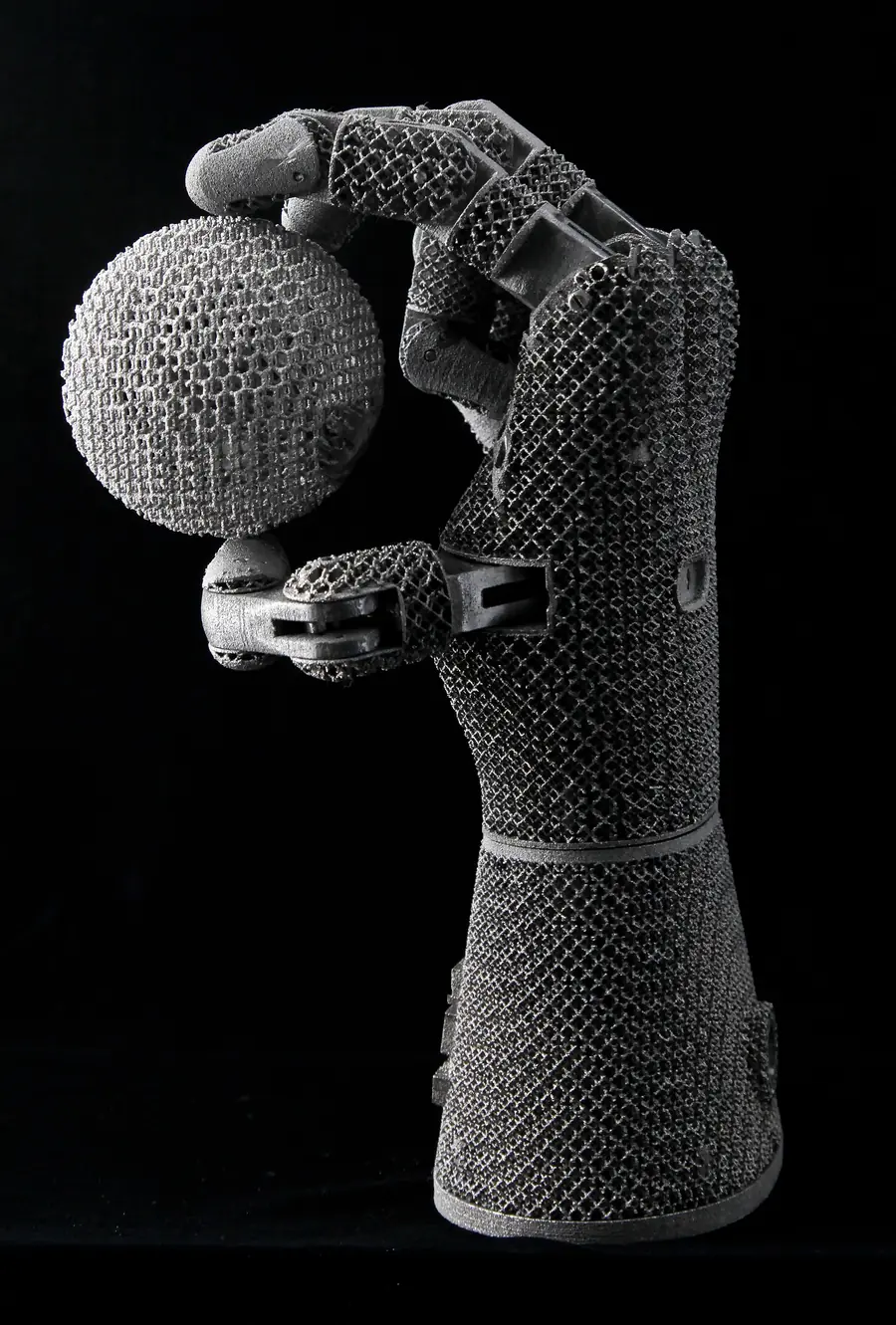
Why titanium is the metal most worth printing
Titanium is expensive to machine: it wears tools quickly and most of a costly billet ends up as chips. Printing melts only the metal the part needs, so the more complex and lightweight the part, the stronger the case for additive manufacturing.
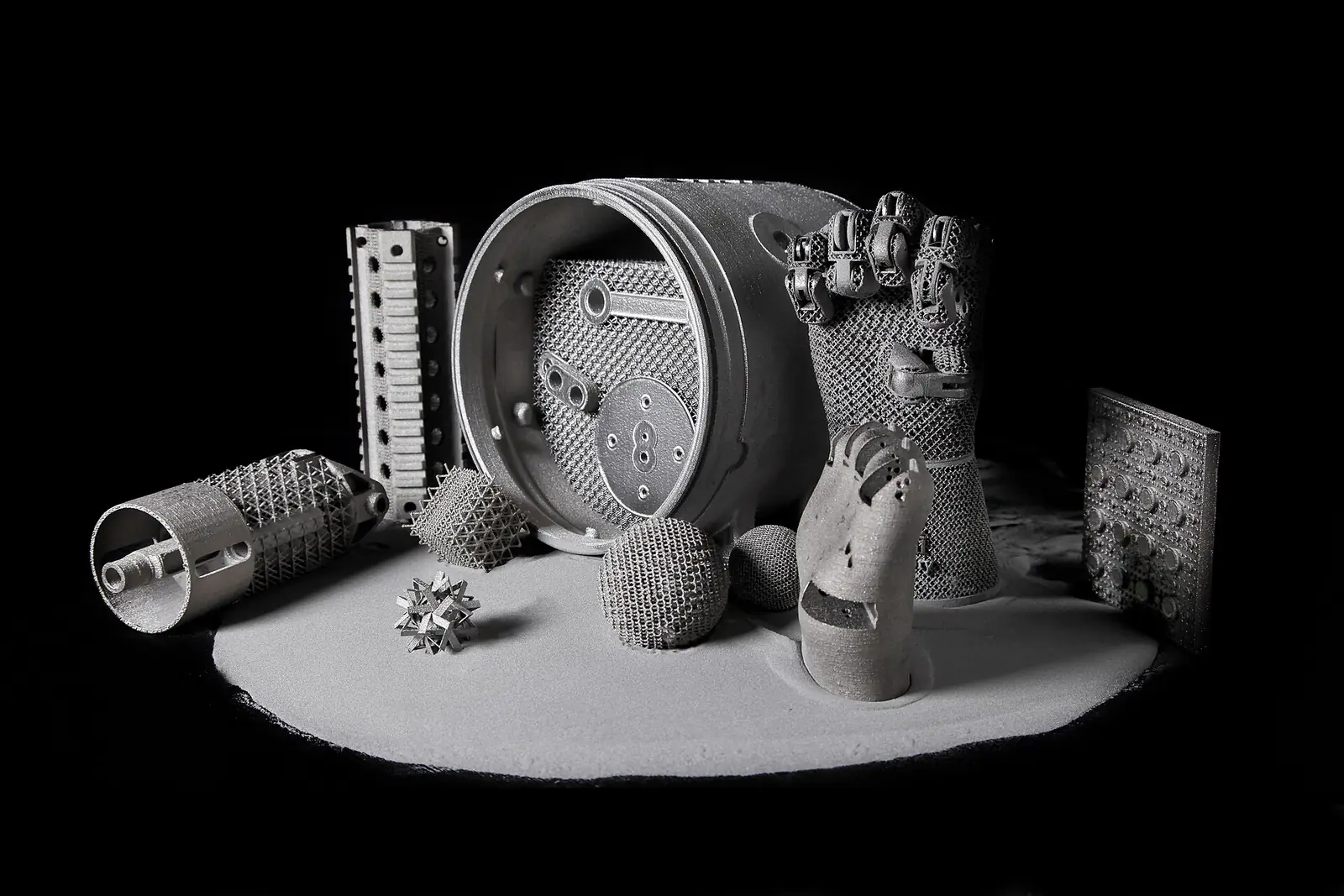
Ti6Al4V at a glance
| Property | Typical value after heat treatment |
|---|---|
| Tensile strength | 950–1,100 MPa |
| Yield strength | 850–1,000 MPa |
| Elongation at break | 10–15 % |
| Density | 4.43 g/cm³ (≈ 56 % of steel) |
| Layer thickness | 40 µm (finer on request) |
| Accuracy | ±0.1 mm as printed |
Indicative; actual properties depend on orientation, heat treatment and HIP. A datasheet comes with the quote.
Grade 5 or Grade 23?
Grade 23 (ELI) has lower oxygen and better ductility and fracture toughness; it is the usual choice for medical devices. Grade 5 is standard for aerospace and industrial parts. Tell us the application and we confirm which powder is used.
Design rules for titanium parts
- Minimum wall about 0.4–0.6 mm; holes under ~1 mm may close up.
- Keep overhangs above ~45° or plan for supports — titanium supports are hard to remove.
- If you plan to machine sealing faces, bearing seats or threads afterwards, leave a 0.3–0.5 mm allowance.
- Use lattices or topology optimisation: weight saving is where titanium pays back.
Finishing we arrange
Vacuum stress relief, HIP for fatigue-critical parts, support removal and wire EDM cut-off, bead blasting and dimensional inspection.